
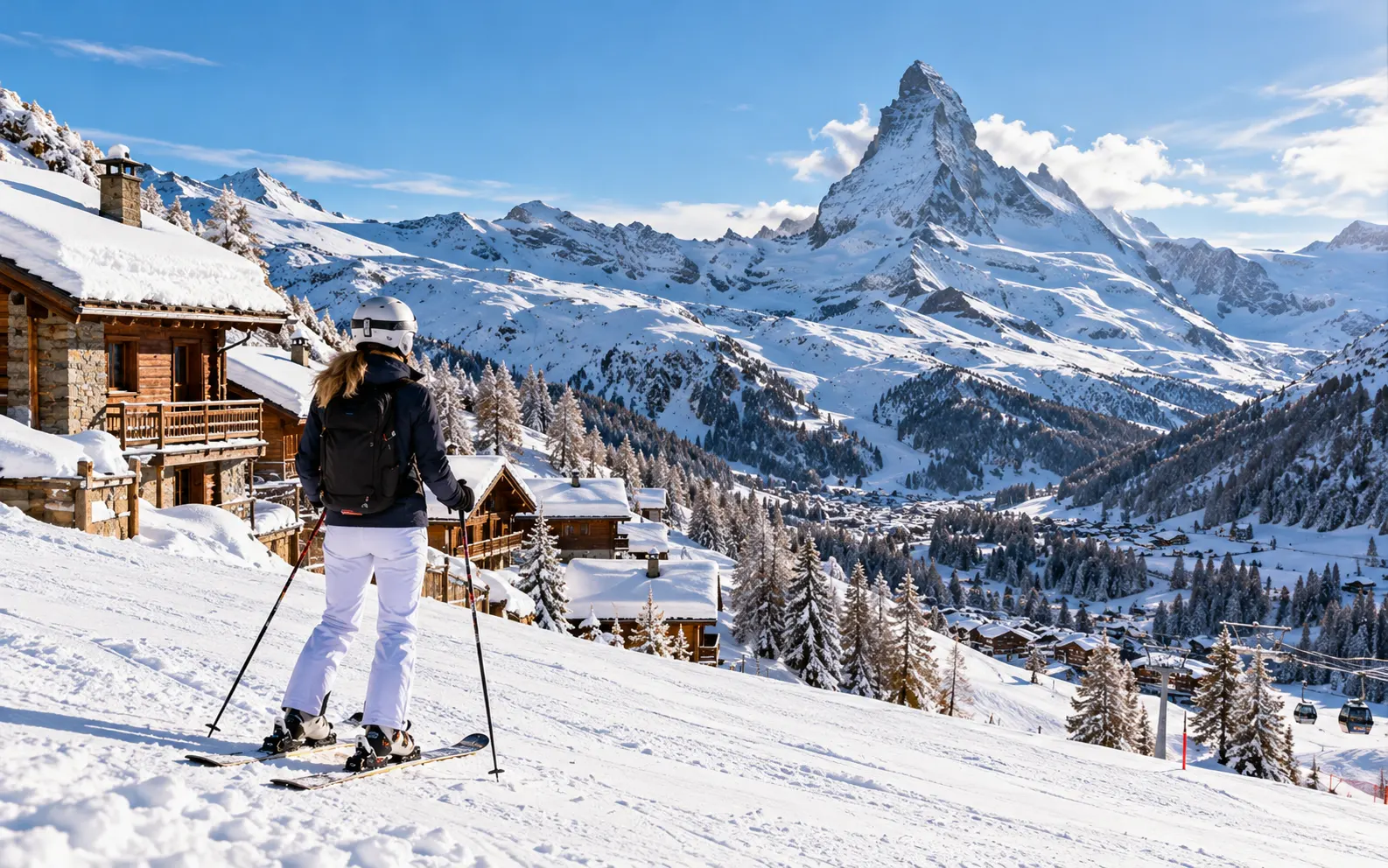
Imagine waking up in a cozy mountain chalet, opening the curtains and discovering a breathtaking panorama of snow-covered peaks stretching as far as the eye can see. Outside, the crisp mountain air welcomes another beautiful winter morning, while freshly groomed slopes are waiting to be explored. Welcome to the Swiss Alps, one of Europe’s most spectacular destinations for a skiing holiday.
Switzerland has long been associated with magnificent mountain scenery, charming alpine villages and world-class ski resorts. From the famous slopes beneath the Matterhorn to the glamorous winter atmosphere of St. Moritz, the country offers an impressive variety of experiences for skiers and snowboarders. Whether you’re planning your first winter holiday in the mountains or looking for challenging slopes and exciting off-piste adventures, there’s a Swiss ski resort to match your expectations.
But a ski holiday in Switzerland is about much more than skiing. Traditional mountain restaurants, scenic railway journeys, luxurious spas and picturesque villages make the Swiss Alps an unforgettable destination even for visitors who prefer to spend only part of their holiday on the slopes.
Discovering Switzerland’s most famous ski resorts
One of the first decisions when planning a skiing holiday is choosing the right destination. Switzerland has numerous ski resorts, each with its own atmosphere and character. Some are known for their challenging terrain and extensive lift systems, while others attract visitors with their traditional architecture, beautiful surroundings and relaxed pace of life.
Perhaps the most iconic destination is Zermatt, the charming mountain village situated at the foot of the Matterhorn. This famous peak has become one of Switzerland’s most recognizable landmarks, and skiing with its distinctive silhouette in the background is an extraordinary experience. Zermatt offers extensive high-altitude skiing, excellent restaurants and an attractive village center. The village itself is car-free, making its narrow streets particularly pleasant to explore.
Another popular choice is Verbier, part of the enormous 4 Vallées ski area. Verbier has gained an international reputation for its challenging skiing, freeride opportunities and lively après-ski scene. Experienced skiers appreciate the varied mountain terrain, while visitors looking for a more relaxed holiday can enjoy the resort’s restaurants, shops and magnificent mountain views. For those interested in exploring different European skiing destinations, Snowroller.eu provides useful information about ski resorts in Switzerland, Austria, France, Italy and Sweden.
From glamorous St. Moritz to traditional mountain villages
If you’re looking for a skiing holiday with a little extra luxury, St. Moritz is difficult to overlook. Located in the beautiful Engadin Valley, this fashionable resort has attracted wealthy travelers, celebrities and winter sports enthusiasts for generations. Its reputation is built on a combination of outstanding alpine scenery, excellent skiing, elegant hotels and sophisticated restaurants. The surrounding mountains offer plenty of skiing opportunities, including the well-known Corviglia area.
However, not every Swiss ski resort is focused on luxury. Places such as Wengen, Grindelwald and Klosters provide a different kind of mountain holiday. Wengen, for example, is a car-free village overlooking the spectacular Lauterbrunnen Valley. Its traditional wooden chalets and peaceful atmosphere make it particularly appealing to travelers who appreciate a more authentic alpine setting.
Grindelwald is another excellent choice, especially for visitors who want to combine skiing with sightseeing. Situated beneath the impressive north face of the Eiger, the village provides access to the Jungfrau ski region and a wide variety of winter activities. The breathtaking mountain scenery alone makes the journey worthwhile.
Skiing opportunities for beginners and experienced visitors
One of the great advantages of skiing in Switzerland is the variety of terrain available. Many resorts offer a mixture of gentle beginner slopes, intermediate runs and more demanding pistes. Well-organized ski schools make it possible for newcomers to learn the basics in a supportive environment, while experienced visitors can spend their days exploring more challenging descents.
Families with children often appreciate resorts with dedicated beginner areas and convenient accommodation close to the lifts. Davos-Klosters, Grindelwald and several smaller mountain destinations offer options for different skill levels. Choosing accommodation near the slopes can be especially helpful when traveling with younger children, as it makes returning to the hotel or apartment much easier.
For advanced skiers, Switzerland offers exciting opportunities to experience steeper terrain and high-altitude skiing. Resorts such as Verbier, Zermatt and Engelberg are particularly well known among experienced winter sports enthusiasts. Off-piste skiing can be an extraordinary adventure, but it requires knowledge of avalanche conditions and appropriate safety equipment. Visitors unfamiliar with the terrain should consider hiring a qualified mountain guide.
When is the best time to visit the Swiss Alps?
The winter skiing season in Switzerland generally begins in late November or December and continues into spring, although the exact dates depend on the resort’s altitude and weather conditions. High-altitude destinations such as Zermatt and Saas-Fee can offer skiing over a particularly long season, while lower resorts are more dependent on natural snowfall and snowmaking facilities.
January and February are popular months for visitors seeking a traditional winter atmosphere with snow-covered villages and cold mountain weather. February can be especially busy because of European school holidays, so accommodation and lift passes should ideally be arranged well in advance. Christmas and New Year are also popular periods, with festive decorations and special events creating a wonderful holiday atmosphere.
March is often an excellent choice for travelers who appreciate longer daylight hours and the possibility of enjoying lunch outdoors in the sunshine. Spring skiing can be particularly pleasant at higher elevations, although snow conditions can change considerably during the day. Before booking, it’s always sensible to check the resort’s expected opening dates, altitude and recent snow history.
Getting to the Swiss ski resorts
Switzerland is famous for its efficient public transportation system, and getting to the mountains can be surprisingly straightforward. International visitors commonly arrive at Zurich or Geneva airports before continuing their journey by train, bus or resort transfer. Many mountain destinations are connected to the national railway network, and the train journey itself can become one of the most memorable parts of the holiday.
Traveling to Zermatt, for example, involves taking a train to the car-free village, with spectacular alpine scenery appearing along the way. Wengen is also reached by mountain railway, while resorts such as Davos and St. Moritz are connected to scenic rail routes through eastern Switzerland. For visitors who prefer not to drive on snowy mountain roads, these connections are a major advantage.
Renting a car can still be useful when visiting smaller destinations or planning a holiday that includes several different regions. However, winter driving requires preparation, and mountain roads can become difficult during heavy snowfall. Before deciding how to travel, consider the distance between the airport, railway station, accommodation and ski lifts.
Accommodation and dining in the mountains
Swiss ski resorts offer everything from simple guesthouses and self-catering apartments to luxurious five-star hotels. Staying in a traditional chalet can be particularly appealing, especially when traveling with family or friends. Wooden interiors, mountain views and evenings spent beside a fireplace are all part of the classic alpine holiday experience.
Accommodation prices vary significantly between resorts and seasons. Famous destinations such as Zermatt and St. Moritz can be expensive, especially during peak holiday periods. Travelers looking for better value may want to consider smaller villages or apartments with cooking facilities. Booking early usually provides a wider choice of accommodation, particularly for families requiring larger apartments.
Food is another important part of the experience. After a morning on the slopes, there’s something wonderful about stopping at a mountain restaurant for a traditional Swiss lunch. Cheese fondue, raclette and rösti are among the best-known local specialties, while regional dishes vary between the country’s German-, French- and Italian-speaking areas. Many mountain restaurants feature sunny terraces where visitors can relax and admire the scenery before returning to the slopes.
Enjoying the Swiss Alps beyond the ski slopes
Even the most enthusiastic skier might appreciate an occasional day away from the slopes. Fortunately, Switzerland offers an impressive selection of winter activities. Snowshoe hiking, cross-country skiing, sledging and scenic walks are available in many mountain destinations. Some resorts also offer ice skating, wellness centers and thermal baths, creating plenty of opportunities to unwind after an active day.
For visitors interested in sightseeing, the Swiss Alps are full of unforgettable experiences. A journey on a mountain railway can reveal spectacular views of glaciers, deep valleys and towering peaks. The Jungfraujoch excursion in the Bernese Oberland is particularly famous, while the Gornergrat Railway above Zermatt provides outstanding views of the Matterhorn and surrounding mountains.
Winter also brings a special charm to Switzerland’s alpine villages. Narrow streets lined with traditional chalets, small bakeries and cozy restaurants create an atmosphere that is difficult to reproduce elsewhere. Spending an afternoon exploring a village, enjoying a hot chocolate or browsing local shops can be every bit as memorable as a day on the mountain.
Planning a ski holiday without overspending
Switzerland is generally considered one of Europe’s more expensive skiing destinations, but thoughtful planning can make a considerable difference to the overall cost. Lift passes, equipment rental, restaurant visits and transportation should all be included when calculating the holiday budget. A hotel with a lower nightly rate may not necessarily be the cheapest option if it requires expensive transfers or daily travel to the ski lifts.
Self-catering accommodation can help reduce food expenses, especially for families and larger groups. Some resorts offer packages combining accommodation and lift passes, which may provide better value than booking everything separately. It is also worth comparing different travel dates, as prices can vary significantly between school holidays and quieter weeks.
Travel insurance deserves particular attention when planning a skiing holiday. Make sure the policy covers winter sports, medical treatment and mountain rescue where appropriate. Activities such as off-piste skiing may require additional coverage or be subject to special conditions. Preparing these details in advance allows visitors to concentrate on enjoying the mountains rather than worrying about unexpected costs.

I’m a real travel enthusiast! My favourite destinations is in the Americas and Asia. Go for it guys!